
Every day people scroll past hundreds of ads without noticing a single one. Banners get ignored. Pop ups get closed before they even load. Video ads get skipped the second the skip button appears. This is the reality every business faces today. People have learned to tune out anything that looks like an advertisement.
Native marketing was built to solve exactly this problem. Instead of interrupting the reader it moves alongside them. It looks like it belongs on the page. It reads like it belongs in the feed. And because of that it gets seen read and remembered far more often than a traditional ad ever could.
If you run a business or manage marketing for one this guide will walk you through what native marketing really is how it works and how you can use it the right way.
Understanding Native Marketing
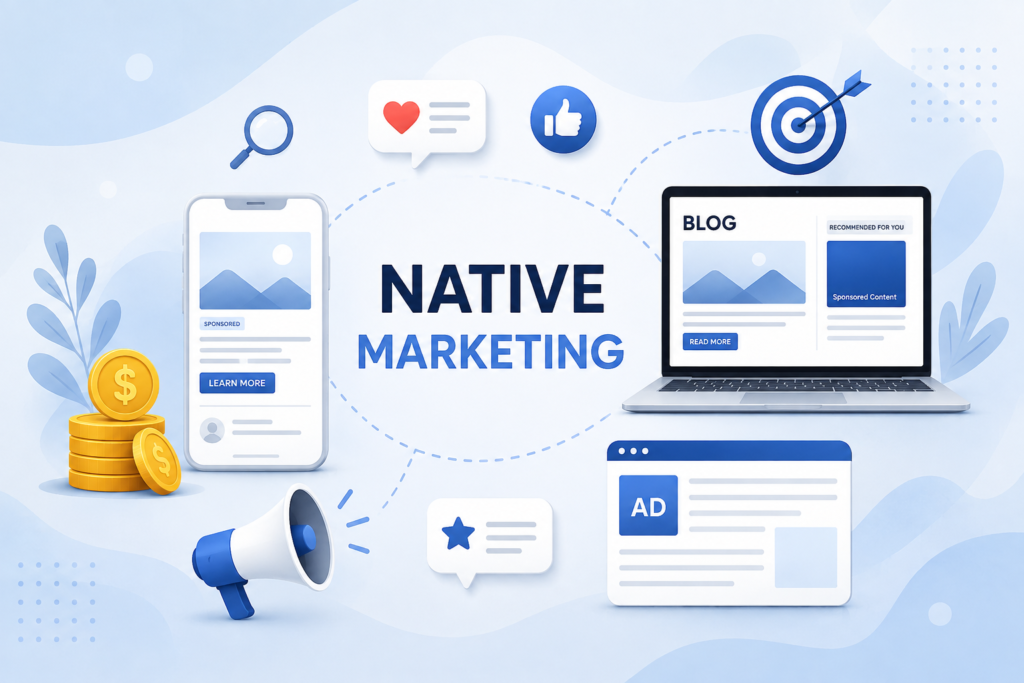
Native marketing is paid content that matches the look feel and function of the platform where it appears. Native ads on news websites resemble articles. A native ad on Instagram looks like a regular post. A native ad in a YouTube feed looks like a regular video suggestion.
The word native refers to this idea of fitting in. The ad is not trying to stand apart from the content around it. It is designed to feel like a natural part of the experience.
This does not mean native ads are hidden or dishonest. Responsible native advertising is always labeled. You will usually see a small tag that says Sponsored Promoted or Paid Partnership. The labeling keeps things transparent while the format itself keeps the ad from feeling intrusive.
How Native Marketing Is Different From Traditional Advertising
Traditional advertising interrupts. A banner sits on top of the content you actually want to read. A pre roll video plays before the clip you clicked on. A pop up covers the screen until you find the tiny close button.
Native advertising works the opposite way. It becomes part of the content itself. Instead of demanding attention through size or noise it earns attention by offering something useful entertaining or interesting enough that people choose to engage with it.
Here is a simple way to think about the difference. A billboard on the highway is traditional advertising. A magazine article written by a car brand that explains how to plan a long road trip while naturally mentioning their new SUV is native advertising. Both are trying to sell something but one demands your attention while the other earns it.
Types of Native Advertising
Native advertising comes in several common formats. Understanding each one helps you choose the right approach for your business.
Sponsored Content
This is one of the most common forms of native advertising. A brand pays a publisher to create or host an article video or piece of content that matches the style of that publication. Business news sites lifestyle blogs and even niche industry publications regularly run sponsored articles. The content usually provides real value to the reader such as tips advice or useful information while naturally connecting back to the brand.
A well written sponsored article does not read like an advertisement at all. It reads like something the publication would have written on its own. A skincare brand might sponsor an article about common skin concerns in changing weather. A software company might sponsor a piece about productivity habits for remote teams. The product gets mentioned but it never becomes the entire focus of the piece.
The strength of sponsored content lies in borrowed trust. Readers already trust the publication they are visiting. When a brand appears within that trusted environment some of that trust transfers over, especially when the content itself is genuinely useful.
In Feed Ads
These are ads that appear directly inside a social media feed a news feed or a content recommendation feed. They look almost identical to the organic posts around them apart from a small sponsored label. Facebook Instagram LinkedIn and X all use this format heavily because it keeps the scrolling experience smooth instead of jarring.
In feed ads work best when they follow the same visual style and posting habits as regular content on that platform. A vertical video with quick cuts and captions performs well on Instagram and TikTok while a text heavy post with a professional photo tends to perform better on LinkedIn. Brands that copy paste the same in feed ad across every platform usually see weaker results than brands that adjust the format for each one.
Recommendation Widgets
You have likely seen these at the bottom of news articles. Boxes labeled things like You May Also Like or Around The Web display a mix of sponsored links and related content. Networks such as taboo-la and out-brain power a large share of this format across the internet.
Promoted Listings
Search engines and marketplaces use this format often. When you search for a product on Google or Amazon some of the top results are paid placements styled to look almost identical to organic results. They are labeled as sponsored but otherwise blend into the results page.
Influencer Partnerships
When an influencer creates content in their own personal style while promoting a product this also falls under native marketing. The content feels authentic because it comes in the creator’s normal voice and format rather than a polished corporate ad script.
Why Native Marketing Works So Well
There are a few clear reasons native marketing consistently performs better than traditional display advertising.
People trust content that feels natural. When an ad looks like it was made specifically for the platform it appears on readers are less likely to feel like they are being sold to. This lowers resistance and increases the chance they will actually pay attention.
It also avoids banner blindness. Years of exposure to traditional ads have trained people to automatically ignore anything that looks like a typical banner or pop up. Native ads slip past this learned behavior because they do not visually scream advertisement.
Native ads tend to provide value first. A good native ad teaches something entertains someone or solves a small problem before it ever tries to sell. This builds goodwill instead of annoyance.
Finally native advertising fits naturally into how people already consume content. Nobody minds seeing one more post in their feed or one more article recommendation at the bottom of a page. It does not disrupt the browsing experience the way a full screen pop up does.
How to Create a Successful Native Marketing Campaign
Running a native marketing campaign is not the same as running a traditional ad campaign. Here is how to approach it properly.
Know Your Audience First
Before writing a single word or filming a single clip you need to understand who you are trying to reach. What do they care about. What problems are they trying to solve. What kind of content do they already enjoy on the platform you are targeting. A native ad that ignores audience interests will fail no matter how well it is disguised.

Match the Platform Tone
Every platform has its own voice. LinkedIn content tends to be more professional and informative. Instagram leans visual and casual. A news website has an editorial tone. Your native content needs to match the tone of wherever it will appear. A stiff corporate style post will feel out of place inside a casual Instagram feed just as a overly casual post will feel out of place on a business publication.
Focus on Value Not Sales
The biggest mistake brands make with native advertising is treating it like a straightforward sales pitch. The whole point of native content is that it offers something useful first. Write a helpful guide. Share a genuinely interesting story. Offer real tips people can use. Let the brand connection come naturally instead of forcing it into every sentence.
Be Transparent About Sponsorship
Always label sponsored content clearly. Not only is this a legal requirement in most countries it also builds long term trust with your audience. People do not mind sponsored content nearly as much as they mind feeling tricked into reading something they did not know was an ad.
Track the Right Metrics
Native ads should be measured differently than traditional ads. Instead of only looking at clicks pay attention to time spent on the content shares comments and how far people scroll or watch. These engagement numbers tell you whether your native content actually resonated with readers rather than just catching a quick glance.
Choosing the Right Platform for Native Marketing
Not every platform suits every business. A business to business software company will likely get better results from sponsored content on an industry publication or LinkedIn than from an in feed ad on TikTok. A fashion or lifestyle brand on the other hand might see much stronger results from Instagram or a recommendation widget on a lifestyle blog.
Before choosing a platform think about where your actual customers spend their time and what kind of content they already engage with there. A restaurant chain might find great success with local influencer partnerships and Instagram posts while a legal services firm might see far better returns from a well written sponsored article on a respected news site.
It also helps to look at what type of content already performs well organically on a platform. If short educational videos are getting strong engagement on a certain page then a native video ad in that same style has a much better chance of blending in and performing well.
Measuring the Success of Native Marketing
Because native ads are designed to feel like normal content the way you measure them needs to shift as well. A click through rate alone does not tell the full story.
Engagement time is one of the most useful metrics. If people are spending real time reading your sponsored article or watching your native video that is a strong sign the content is resonating rather than being scrolled past.
Scroll depth and completion rate matter too, especially for longer sponsored articles or native videos. If most readers stop halfway through the content probably needs to be more engaging or better matched to audience interest.
Social signals such as shares comments and saves are also valuable. Native content that gets shared organically is a strong indicator that it succeeded in not feeling like an ad, which is really the whole point of the format.
Finally it is worth tracking brand lift over time rather than only looking at immediate conversions. Native marketing often works more slowly than a direct response ad. Its real strength is building familiarity and trust which eventually leads to conversions down the line rather than an instant sale.
Common Mistakes Businesses Make With Native Ads
Many businesses jump into native advertising without fully understanding the format and end up making avoidable mistakes.
One common mistake is making the content too promotional. If every paragraph mentions the product or pushes a sale readers will disengage quickly. Native content works best when the brand message stays in the background.
Another mistake is ignoring platform specific formatting. A long form article style piece dropped directly into a fast scrolling social feed usually under performs because it does not match how people consume content there.

Some businesses also skip proper labeling either intentionally or by accident. This can damage trust and in many regions can lead to legal or platform penalties.
Lastly many brands treat native advertising as a one time experiment instead of an ongoing strategy. Native marketing tends to perform best when it is tested refined and repeated over time rather than launched once and forgotten.
Is Native Marketing Right For Your Business
Native marketing works well for almost any business that wants to build trust while promoting products or services. It is particularly effective for brands with a story to tell a lesson to teach or genuine expertise to share.
Small businesses can use native marketing through guest posts on relevant blogs sponsored social posts or partnerships with local influencers. Larger businesses can invest in sponsored articles on major publications or run broader in feed campaigns across multiple platforms.
The format is flexible enough to work at almost any budget level which makes it accessible even for businesses that are just starting to invest in digital marketing.
Final Thoughts
Native marketing has become one of the most effective ways to reach audiences who have grown tired of traditional advertising. By blending naturally into the platform it appears on it earns attention instead of demanding it. The key to doing it well is simple. Understand your audience match the tone of the platform lead with real value and always stay transparent about sponsorship.
Brands that follow these principles consistently see stronger engagement better brand trust and more meaningful results than they ever could from banner ads or pop ups alone. As more people continue to tune out interruptive advertising native marketing will only continue to grow in importance for businesses that want their message to actually be seen and remembered.
Learn more about Tradional Marketing Vs Digital Marketing: Which Is Better? to get the depth differences between these two marketings