
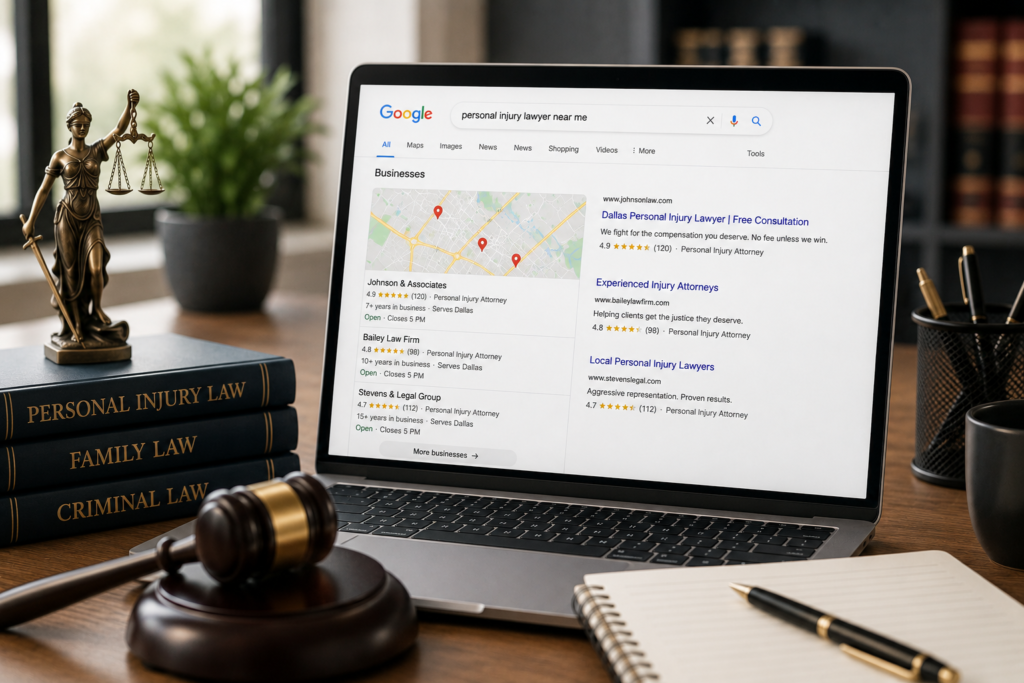
Nobody flips through a phone book anymore. Nobody really asks a neighbor for a lawyer referral either, not the way they used to. People type their problem into a search engine and call whoever shows up first. That’s just how it works now. So if your firm doesn’t show up on that first page, you’re basically invisible to a huge chunk of people who need a lawyer this week, maybe even today.
Advantages of SEO for Law Firms
SEO helps law firms attract potential clients by improving their visibility in search engine results. When people search for legal services, they usually contact firms that appear on the first page of Google. A strong SEO strategy increases organic traffic, generates qualified leads, and reduces dependence on paid advertising. It also builds trust because users often view top-ranking firms as more credible and reliable. Local SEO helps attorneys reach clients in their service areas, making it easier for people to find nearby legal assistance. In addition, SEO improves website performance, user experience, and mobile accessibility, encouraging visitors to stay longer and contact the firm. Over time, consistent SEO delivers long-term results, making it a cost-effective marketing investment that supports sustainable business growth and a stronger online reputation.
This guide covers what actually works for law firm SEO in 2026. Some of it is technical, some of it is about content, some of it is local search, and some of it comes down to reputation. All of it matters, though some parts matter more depending on your practice area and your market.
Why SEO Actually Matters for Law Firms
Search engines treat legal topics differently than they treat, say, recipe blogs or product reviews. Legal advice can affect someone’s finances, their custody arrangement, their freedom in a criminal case. Because of that, search engines are pickier about which legal content they trust enough to rank well. They want to see real expertise behind the page, not just decent writing.
That’s actually good news for smaller firms willing to put in the work. A three-person firm with a well-built, honest website can outrank a fifty-attorney firm that never touches its site after launch. Size doesn’t guarantee visibility. Effort usually does.
Think about how someone actually searches for a lawyer. Say they just got in an accident, or they’re staring down a divorce they didn’t see coming. This isn’t like picking a restaurant for dinner. They’re going to read reviews, click into several firm websites, maybe bookmark a few and come back later. If your firm keeps showing up throughout that process, you’re the name they remember when they finally pick up the phone.
Getting the Technical Basics Right
None of the content strategy matters if your website has technical problems search engines can’t get past. This part isn’t glamorous, but skipping it undercuts everything else.
Page Speed
A lot of law firm websites load slowly, and it’s usually because of huge unoptimized images, too many plugins, or a bloated page builder theme. Visitors bounce when a page takes too long, and search engines notice that behavior. Compress your images. Turn on caching. Cut whatever scripts you don’t actually need. The goal is a page that shows real content within a couple seconds, even on a spotty mobile connection. To know your website running speed Google PageSpeed Insights to redirect on the

Mobile Friendliness
Most people searching for a lawyer are doing it from their phone, especially if they need help with something urgent like a DUI or an accident. If your site isn’t built to work well on a small screen, people will leave, and your rankings will suffer too since search engines mostly judge sites by their mobile version now.
A Clean, Crawlable Site Structure
Your site should run on HTTPS, have a working sitemap, and organize its pages logically by practice area and location. Don’t let pages sit orphaned with no internal links pointing to them. Search engines find new pages by following links, so a page nobody links to might as well not exist.
Schema Markup
Adding schema markup tells search engines exactly what’s on a page: this is a law firm, this is an attorney, this is a review, this is an office hours listing. Get this right and you start seeing richer results in search, things like star ratings or credentials showing up right next to your listing.
Finding the Right Keywords
Long-Tail Phrases
Rather than fighting for a handful of broad terms everyone else wants too, build content around the specific questions people actually type in. Something like “what happens if I’m rear-ended at a red light” or “how long does an uncontested divorce take in Texas.” Individually these don’t get huge search volume, but add them up across dozens of pages and they bring in real, qualified traffic. They’re also a lot easier to rank for.
Finding the Right Keywords for Law Firms
Choosing the right keywords helps law firms attract clients who are actively searching for legal services. Focus on high-intent terms such as “personal injury lawyer,” “divorce attorney near me,” or “criminal defense lawyer” combined with local locations to improve search rankings and generate qualified leads.
Type “divorce lawyer” into a keyword tool and you’ll get the obvious stuff. The real value is usually buried a bit deeper.

Location-Based Terms
Legal work is tied to geography, so location matters a lot here. Don’t stop at just the city name. Think about neighborhoods, counties, nearby courthouses, anything a local client might actually search. If your firm covers several cities, build a real page for each one. Don’t just duplicate one page and swap out the city name, search engines catch onto that pattern fast and it tends to hurt more than help.
Matching Intent
Somebody searching “statute of limitations for medical malpractice” probably isn’t ready to hire anyone yet. They’re researching. Somebody searching “best employment lawyer near me” is closer to picking up the phone. Build your blog content around the research-stage questions and keep your practice area pages focused on converting the people who are ready to talk.
Making Practice Area Pages Actually Work
These pages do the heavy lifting. They’re what turns a random visitor into an actual consultation. Treat each one like its own project, not a copy-paste job.
Real, Original Content
Search engines are good at spotting thin or duplicated content, and legal topics get extra scrutiny because of the trust factor involved. Every practice area page needs its own explanation of the law, its own examples of situations clients face, and its own description of how your firm actually handles these cases. Ten city pages with the same paragraph swapped in and out isn’t going to cut it anymore.
Titles and Descriptions
Write title tags that combine your practice area, your location if it’s relevant, and something that actually sets you apart, all while keeping it short enough that search engines don’t cut it off. Meta descriptions won’t boost your ranking directly, but a good one is the difference between someone clicking your listing or the one right below it.
Structure People Can Actually Skim
Break your content up. Use headers. Short paragraphs. Bullet points for things like eligibility requirements or timelines. Nobody wants to read a giant block of legal text on their phone, and search engines have an easier time understanding a page that’s organized clearly too.
Clear Next Steps
Every practice area page needs an obvious call to action, whether that’s a phone number, a contact form, or a booking link. Put it near the top. Repeat it further down the page. Don’t make people scroll to the footer to figure out how to reach you.
Local Search Is Where Most of Your Clients Come From
For the vast majority of firms, local search results bring in more business than any national ranking ever will. If you only fix one thing on this list, this is probably the one.
Your Business Profile
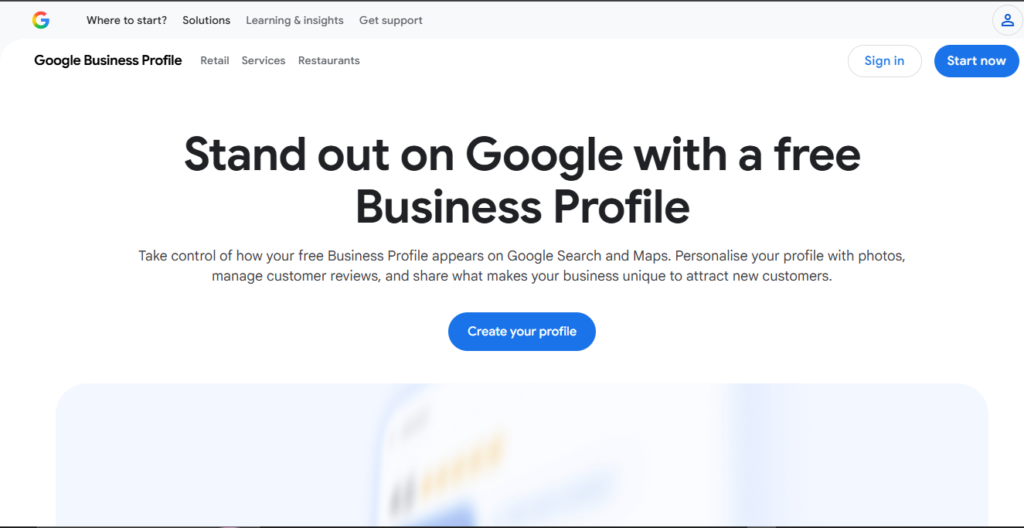
Claim your listing on the major search and map platforms and fill it out completely. Right categories, accurate hours, correct service area, real photos of your office and your team uploaded regularly. A half-finished profile signals a firm that doesn’t pay attention to detail, and that hurts you both with search engines and with the people actually looking at your listing.
Keeping Your Info Consistent
Your firm’s name, address, and phone number need to match everywhere. Every directory, every bar association page, every legal referral site. Even something small like writing “Street” one place and “St.” somewhere else can create doubt in a search engine’s mind about whether your listing is even accurate.
Reviews
Reviews do two jobs at once. They influence rankings, and they influence whether someone actually calls you. Set up a simple habit of asking satisfied clients for a review once their case wraps up. And respond to reviews, all of them, even the bad ones, without ever discussing case details publicly.
Location Pages
If you’ve got more than one office, each one deserves its own real page. Nearby courthouses, parking notes, staff specific to that location, testimonials from clients in that area. What you shouldn’t do is build five nearly identical pages that only differ by city name. That gets flagged as duplicate content almost immediately.
Content That Builds Real Authority
Beyond your core pages, an ongoing stream of content shows depth and pulls in people earlier in their decision process, before they’re even sure they need a lawyer yet.
Put a Real Name on It
Every article should have a byline, ideally from an actual attorney or someone credentialed at your firm, along with a short bio. This matters for readers who want to know who’s talking, and it matters for search engines trying to judge whether your content comes from someone who actually knows the subject.
Keep Old Content Fresh
Laws shift. Deadlines change. A statute that mattered two years ago might read differently today. Old, stale legal content can actively hurt you, both in rankings and in how trustworthy your firm looks. Go back through your published articles now and then, check the facts still hold up, and update anything that’s aged poorly.
Video Content
Short videos answering common questions or walking through what to expect during intake can add a lot of value. Put them on the relevant pages, include a transcript for accessibility and so search engines can read what’s being said, and you get benefits beyond whatever platform hosts the video itself.
Answer the Questions Clients Actually Ask
The best legal content usually mirrors what comes up in real consultations. Write about common misunderstandings, walk through what a legal process actually looks like step by step, be honest about what a case costs financially and emotionally. This kind of content earns trust, and it tends to attract natural links from other sites that find it useful.

Building Links That Actually Help
Links from other credible, relevant sites are still one of the strongest signals you can build. The legal field has some natural paths to earning them.
Bar Associations and Legal Directories
Get listed on your state bar association’s site, relevant law school alumni pages, and legitimate legal directories. These carry real weight because they’re directly tied to the legal field, unlike generic business directories.
Guest Writing and Press Commentary
Offer thoughtful input to journalists covering legal stories, or write guest pieces for publications people in your field actually read. Skip the sites that will publish anything for a fee. Those links don’t help and can sometimes hurt.
Community Involvement
Sponsor a local event. Support a bar association function. These things often naturally result in a link back from the organization’s own site, and those links carry real local relevance that’s hard to fake.
Steer Clear of Shortcuts
Buying links, joining link farms, setting up “you link to me and I’ll link to you” arrangements, none of this ends well. It can get your site penalized, and recovering from that is a slow, painful process. Build real relationships and useful content instead. It’s slower, but it holds up.
What to Actually Track
Rankings alone don’t tell you if SEO is working. What matters is whether it’s bringing in clients.
Look Past the Rankings
Yes, check your keyword positions. But also watch your organic traffic trends, your conversion rates, and most importantly, how many actual consultation requests are coming through search. A page sitting at position one that never generates a single inquiry has a different problem than a page that isn’t ranking at all, and you need to know which one you’re dealing with.
Track Your Calls
A lot of people still just pick up the phone instead of filling out a form. If you’re not tracking which pages and keywords lead to actual calls, you’re missing a big piece of the picture. Set up call tracking tied to your organic traffic so you know what’s really working.
Be Patient
Legal SEO takes a while. Given how much scrutiny search engines apply to this category, you’re probably looking at several months of steady work before you see real movement. Set expectations with anyone at your firm who’s watching the numbers, and don’t scrap a solid strategy after three weeks just because nothing dramatic happened yet.
Pulling It All Together
None of this works as a single fix. A fast, technically perfect site with weak content won’t hold up. Great content on a slow, broken site won’t get found in the first place. It takes the technical work, the content, the local signals, and the links all moving together.
Firms that treat their website like a real part of their practice, not just something they built once and forgot about, tend to pull ahead of the firms that don’t. It takes real effort to get there. But the payoff is a steady flow of people finding you exactly when they need help, already informed, already ready to talk.
Learn more about how local SEO works by reading our blog The Complete Guide to Local SEO for Pakistani Businesses or to make your business more visible in search engine read How to Optimize Your Google Business Profile: Complete Guide
FAQs
1. What is SEO for law firms?
SEO for law firms is the process of optimizing a law firm’s website to rank higher in search engine results. It helps attract potential clients searching for legal services online and increases organic website traffic.
2. Why is SEO important for lawyers?
SEO improves online visibility, builds trust, generates qualified leads, and helps law firms compete with other legal practices without relying entirely on paid advertising.
3. How long does law firm SEO take to show results?
Most law firms begin seeing noticeable improvements within 3 to 6 months, while competitive legal markets may take 6 to 12 months to achieve significant rankings.
4. What are the best keywords for law firms?
The best keywords depend on your practice areas, such as personal injury lawyer, divorce attorney, criminal defense lawyer, family lawyer, and corporate lawyer, combined with your target location.
5. Does local SEO help law firms get more clients?
Yes. Local SEO helps your firm appear in Google Search and Google Maps when nearby clients search for legal services, increasing consultation requests and phone calls.
6. Is SEO better than Google Ads for law firms?
SEO provides long-term organic traffic and sustainable growth, while Google Ads deliver immediate visibility. Using both strategies together often produces the best results.
7. How often should a law firm update its website?
Law firms should regularly publish new content and update existing pages every few months to keep information accurate, relevant, and aligned with current SEO best practices.
8. What are the biggest SEO mistakes law firms make?
Common mistakes include using duplicate content, ignoring local SEO, having a slow website, neglecting mobile optimization, and failing to optimize Google Business Profile.
9. Can small law firms compete with large firms using SEO?
Yes. By targeting local keywords, creating high-quality content, optimizing for local search, and earning quality backlinks, small law firms can compete effectively in search results.
10. How do I measure the success of law firm SEO?
Track organic traffic, keyword rankings, consultation requests, phone calls, form submissions, conversion rates, and Google Business Profile performance using tools like Google Analytics and Google Search Console.